









O seu guia para a soberania!
The Loss of Financial Sovereignty: How Governments Seized Control of the Currency
Share your love
Over the last few centuries, control over currency has migrated from the individual to the state; this article briefly shows how this happened, why it eroded economic autonomy and the beginnings of a practical way to restore financial sovereignty.
If you ask someone what currency is, the most common answer would be something like “the official money of a country”. Others might explain it more elaborately, saying that “it's what the government issues to facilitate exchanges between citizens”.
It's rare that the state is efficient at anything, but it has certainly succeeded in usurping the concept of currency and money. However, this appropriation is a much more recent phenomenon than most believe.
For thousands of years, money arose and was adopted spontaneously by people, without centralized control. Only later did governments take control of the currency. In this article, as well as revisiting this trajectory, I argue why it is essential to recover financial sovereignty.
Sovereign
Pay
Your pocket Swiss bank.
Copper via PIX anonymous and receive it at Bitcoin, dollar or balance in international card.
Knowing
Only 9 vacancies
The emergence of money
Even before coins, exchanges took place in society directly. If John was a good fisherman and Anna a good gatherer, barter was what allowed the two of them to exchange their surplus and eat fresh fish and fruit together.
One step beyond the primitive economy, however, direct exchanges showed limitations. If Maria had a head of cattle and wanted to exchange them for rice, beans and a set of clothes, she wouldn't be able to divide up her cattle and give one part to a farmer and another to a tailor.
In addition to indivisibility, barter also faces the difficulty of finding a “coincidence of desires”. Returning to the first example, if Ana wanted to eat a fish from John, but John didn't want her fruit, she would need to find a third person who wanted her fruit and, at the same time, had something that John wanted.
That would be the indirect exchange. There's a slightly higher level of complexity, but it's from this that money later emerged to simplify everything.
Ana discovered that she needed to exchange her fruit for an intermediate good that fisherman João demanded, so that she could finally buy and eat fish.
Soon, not only Ana, but society as a whole realized that some products served better than others as intermediate goods. Salt, for example, has a marketability incredible, after all, who doesn't need salt at least occasionally?

In Rome, Abyssinia (now Ethiopia) and even the Mayans used salt as a medium of exchange. In colonial Virginia they used tobacco, in the West Indies sugar, in Scotland nails, and the list goes on...
It was enough that the good was divisible and in demand for people to have enough confidence to use it as a means of exchange, or, in other words, money.
Naturally, people noticed that some goods were better than others as a means of exchange. Despite having excellent divisibility and good demand, imagine the difficulty of buying a house with salt. How many kilos would you need to pay for it? The difficulty of carrying the whole amount would be another problem.
Ancient societies soon came to the conclusion that rare items such as gold and silver, as well as being in high demand as ornaments, solved this problem. These precious metals maintained excellent divisibility while they were scarce, which helped maintain a similar value over time, and improved (but did not completely solve) the ease of transportation, since smaller amounts could be worth more.
What's more, precious metals have practically infinite durability. Gold doesn't oxidize, rust or lose its shine, and it's even a little better than silver in this respect, which helps explain its higher value as a precious metal. value reserve.
Understanding the history of money goes far beyond simple curiosity. It is essential to realize that money is not a magical unit of account that emerges from a state decree. Money is, first and foremost, a commodity like any other, with a “price” defined by the demand for it and a real stock. Its fundamental difference is that, over time, it is valued above all by its marketability.
The First Banks
Once gold and silver had been chosen as the winning goods among the other contenders for the role of money, money took the next step towards becoming paper.
As physical goods, these metals were traded in grams, kilos, ounces, pounds, tons or any other measure. For larger purchases, the problem is clear: the transportability and even security. It was to solve these problems that the first banks emerged as a kind of gold warehouse.
For a fee, people kept their money safe in the bank and received receipts that corresponded to the amount stored. You can imagine the next development: it became much easier to use the receipt itself as a gold voucher.
It's important to note that, up to this point, the bank hasn't changed the money supply at all. Bank deposits merely served as a monetary substitute for the gold in the vault. As long as the paper was used, the gold in the vault became nothing more than a ballast.
But this ease came at a cost: trust in the bank, since it promised to return the money at any time by returning the receipt. And trust came at a price.
It didn't take long for banks to stop being satisfied with the fees charged for storage, after all, they were sitting on a pile of eye-watering gold. So much idle wealth hid an absurd potential return.
As bank receipts were more convenient to use as cash, few people asked for their stored gold back. And the banks assumed that it was highly unlikely that everyone would withdraw at the same time.
Meanwhile, the economy was growing and there was more and more demand for credit. The perfect storm for an idea that would later be called fractional reserve.
The institutions that issued the gold certificates began to treat the deposits as if they were their own assets, rather than custodial assets. And they started issuing new gold certificates to lend them out at interest to make even more money.
It is from this point that banks become insolvent. If all customers tried to redeem their deposits at the same time, the bank would go bust. This phenomenon is called bank run.
As long as reality doesn't knock on the bank's door, the binge continues. And the consequence for society is artificial inflation of the currency: the money supply increases, without necessarily having a richer population.
Fractional reserve banking is when the bank keeps only part of the money that people deposit and lends the rest. Some authors, such as economist Murray Rothbard, argue that fractional reserve banking is fraud. And that was the first major problem resulting from the loss of individual autonomy over custody. But it gets worse.
The hand of the state
Governments didn't just appear out of thin air. The economist Douglass North argues that institutions, including the state, arise to reduce transaction costs, especially those linked to trust and compliance with contracts.
To make an exchange with someone, you need to trust that the other person will keep their word, won't disappear or cheat you. And that costs a lot. Governments have inserted themselves into society as general guarantors of contracts and property, and this has always been the greatest “air of legitimacy” they have managed to convey.
Several inventions have been able to reduce the cost of trust throughout history, such as money itself, because it is an impersonal and verifiable way of transferring value. That's why they facilitate exchanges in general.
On the other hand, the emergence of currencies also made it easier for the state to collect its taxes, since in the past it had to appropriate physical goods directly, which was extremely unpopular. Now, together with the banks, it had the opportunity to keep part of the means of exchange, or even inflate that money.
“In the free market, money can be acquired in two ways: either the individual produces and sells goods and services desired by others, or he takes up gold mining. But if the government discovers ways of counterfeiting - creating money out of thin air - then it can quickly produce its own money without having to go to the trouble of selling services or mining gold. It will thus be able to misappropriate resources quite discreetly, without arousing the hostilities triggered by taxation. Indeed, counterfeiting can create in its victims the happy illusion of incomparable prosperity.” - Murray Rothbard.
Rothbard compares inflation to the counterfeiting of coins, because both increase the amount of money available in the economy in an artificial way. In the context so far, artificial means not backed by gold.
But fractional reserve banking was only the first step in the detachment of paper money from gold. Later, the state completely detached paper money from its original backing and gave rise to fiat money, the last great blow to the financial sovereignty of individuals.
The End of the Gold Standard and the Birth of Fiat Money
The gold standard collapsed as a result of political choices whose real cost was rarely discussed openly. For centuries, gold acted as an anchor for the monetary ship. But while it was useful for the safety of sailors, it was interesting for governments to maintain total control of the currency, without restrictions.
This ballast was definitively broken when the United States broke the Bretton Woods agreement, an economic arrangement signed in mid-1944 that linked the currencies of several countries to the dollar and the dollar to gold.
For a number of reasons, the European central banks wanted to redeem massive amounts of gold using their stocks of dollars, but the American president at the time, Richard Nixon, put an end to the agreement. It's true that from the start of the arrangement, individual sovereignty had already gone down the drain, as the right to redeem gold with dollars was exclusive to other governments and their central banks.
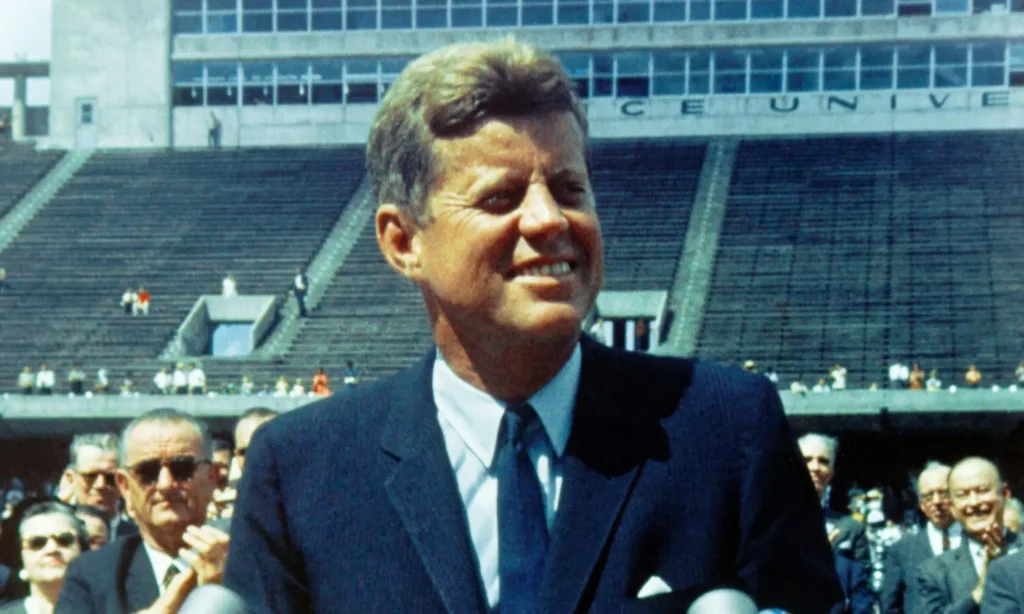
On August 15, 1971 Nixon's announcement of what should have been a temporary suspension of the gold bailout. But, to adapt a famous phrase by Milton Friedman: nothing is as permanent as a temporary government measure. In reality, Nixon heralded the beginning of an era that lasts to this day, the era of fiat currencies.
Also called currencies fiat, As a result, they have no backing, so their value depends exclusively on trust in the institutions that issue them. As a result, the scope of action of governments and central banks has been expanded. Governments can now finance themselves freely by issuing money, which dilutes the purchasing power of those who use state currency.
This wouldn't be such a problem if people had the option of simply not using this type of currency. But practically everywhere in the world there is forced currency, which means that there is basically only legal certainty in transactions using state currency.
In other words: real sovereignty over one's own purchasing power took its hardest blow, and the result was an increase in the frequency of cases of hyperinflation around the world, including Brazil in the 80s and 90s.
The Brazilian case
Brazil is a painful example of how the loss of control over currency impacts on everyday life. At the end of the 20th century, the Brazilian economy experienced repeated cases of high inflation and disastrous economic plans.
With every attempt to circumvent a crisis, there was a new currency, a new cut in zeros, a new promise. For ordinary Brazilians, all this meant: evaporated savings, prices that changed all the time and a reduced ability to plan for the future.
But the most dramatic symbol of the loss of sovereignty was the confiscation of savings, which took place in 1990 in the so-called Collor Plan. In a measure announced overnight, the government simply blocked the entire country's access to its own money.
In order to contain the unbridled rise in prices, which was largely the government's own fault for its inflationary measures, the state prevented citizens from spending their own resources. As well as directly damaging families' liquidity, it was also a cruel way of shifting the blame for inflation from the government to ordinary citizens.
The confiscation was so tragic that some Brazilians ended their lives.
This episode is important because it sheds light on something fundamental: confiscation was only possible because individuals no longer had real sovereignty over their own money. They depended entirely on the state and the banking system to hold, move and access the fruits of their labor.
The population was already used to a currency that was controlled, manipulated and managed from the top down. Without a decentralized asset or an independent way of storing value, there was no alternative or defense possible.
Four years later, with the Real Plan, As a result, Brazil took a breather from stabilization, the inflationary madness had taken a break. But stability is not synonymous with sovereignty: the currency is still entirely managed by state authorities and the structural problem remains. Issuance is centralized and has no real brakes.
A Path to Reclaiming Financial Sovereignty
If the loss of sovereignty came with the centralization and state fiduciary status of the currency, recovery involves restoring to the individual some degree of control over their store of value and means of exchange. There are no magic solutions, but there are practical paths and tools that deserve attention.
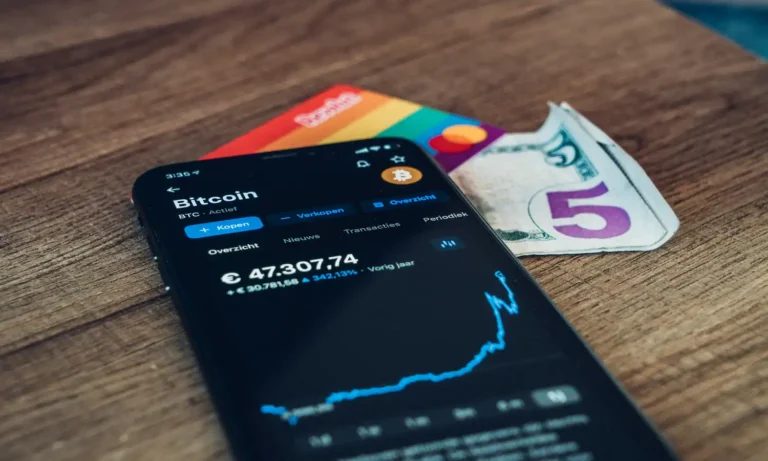
One of the most creative and interesting solutions came with technological advances. In 2008, Bitcoin was created in an online discussion forum on cryptography: a digital currency and payment network concept.
Although it was met with skepticism at first, a year later the idea took shape and over time it gained traction. To explain his idea, the creator of this solution introduced himself as Satoshi Nakamoto, wrote:
“As a mental exercise, imagine there was a common metal as rare as gold, but with the following properties: dull gray color; not a good conductor of electricity; not particularly strong, but also not ductile or easily malleable; not useful for any practical or ornamental purpose; and a special, magical property: it can be transported through a communication channel.”
What Satoshi has done, in practice, is to invent a completely digital asset that has the following properties marketable. He presented a kind of digital gold and raised the possibility of people voluntarily adopting it as money, alongside the state money that we are obliged to use.
Bitcoin is durable, it doesn't wear out, break or oxidize; it can be sent to anyone in the world in minutes with a few clicks; it's more divisible than any metal in the world; it's limited in supply and impossible to change without global consensus; it's secure from attack in an elegant way (it's more financially advantageous to collaborate on the security of the network than to spend resources attacking it); and it's censorship-resistant: No government, bank or company can prevent a valid transaction.
Bitcoin is money that works even when someone doesn't want you to use it. And that's why it's being adopted by an increasing number of people around the world, not least because it also knows no borders.
Its growing adoption has resulted in an explosion in the price, which has gone from cents (since the first recorded commercial transactions) to over 100,000 dollars per coin recently. This isn't a problem for smaller transactions due to Bitcoin's good divisibility.
The creator of the currency ended up disappearing around 2010, but this didn't hinder the development of the technology, since the code is completely open and volunteer programmers have continued to improve the currency. Satoshi's disappearance is even viewed positively by some, as it was ample proof of the decentralization of this digital payment network.
However, sovereignty also has its costs: due to the lack of a central body controlling the currency, its price can be highly volatile without any kind of central interference, which can lead to fears. The loss of coins is also another frequently reported problem when you don't carefully back up your digital wallet.
There is also little point in running away from the problems of currency centralization and relying on easy solutions that transfer responsibility for your financial security to third parties (even worse if they offer guaranteed profits).
A realistic view
Regaining sovereignty is not simply about exchanging real for Bitcoin. It's about combining strategies: improving financial education, reducing your exposure to unpredictable politics, and adopting tools that give individuals back control over part of their assets. Bloated states will probably exist for a long time to come; all individuals can do is try to protect themselves from their dangerous decisions about currency.
In future articles, we'll discuss more in-depth practical solutions and tools to improve your autonomy and bring more financial security to your life. Keep following Soberano!




 English