







O seu guia para a soberania!
The World's Most Private Bitcoin Wallet
Share your love
Imagine a piece of software so effective at giving people back their financial sovereignty that it ended up annoying the government to the point of putting its developers in prison. That's exactly what happened with Samourai Wallet, an open source project that allowed Bitcoin (BTC) users to move their coins with as much privacy as possible.
In April 2024, US authorities arrested two programmers, Keonne Rodriguez, 37, and William Lonergan Hill, 67, on charges of facilitating money laundering from darknet black markets such as Silk Road and Hydra Market.
According to a recent press release, The Samourai Wallet was responsible for obscuring the illicit origin of more than US$ 237 million in BTC. Those responsible for the wallet received sentences of 4 to 5 years in prison, and 3 years of supervision after release. In addition, both paid fines of US$ 250,000 and returned around US$ 6.3 million of what they profited from offering the coinjoin service for the more than US$ 237 million in “dirty bitcoins”.
Coinjoin is a technique for mixing coins in order to anonymize each balance at the end of the shuffle. And although Samourai did not hold any funds from users, it did collect a fee for offering the service.
Sovereign
Pay
Your pocket Swiss bank.
Copper via PIX anonymous and receive it at Bitcoin, dollar or balance in international card.
Knowing
Only 9 vacancies
The charge of conspiracy to launder money was negotiated into a deal where the devs would receive sentences for operating a money transmitting company without a license.
But the understanding that fee collection would be necessary to classify Samourai as an unlicensed money transmitter contrary the recommendation of the regulatory agency FinCEN itself, which considers the custody of funds to be essential for classification.
It is important to note that techniques that increase your privacy are not problematic in themselves, but rather the alleged illicit origin of the funds. There are several legitimate reasons for maintaining a reasonable level of anonymity, including personal security.
In addition to coinjoin, which Samourai calls Whirlpool, she also developed another lucrative solution, Ricochet. It was nothing more than the creation of intermediary transactions before sending coins to their final destination. Ricochet is mainly useful for sending coins to companies and services that may not accept coins that have come directly from a coinjoin.
According to the US Department of Justice, the creators of the Samourai wallet not only developed and offered these services, but actively promoted them to criminals and knew that the technology was used as “money laundering for bitcoin”. The creators deny the prosecution and say that the messages were taken out of context by the prosecutors in the case.
Even so, the site SamouraiWallet.com was seized and the wallet had to be abandoned. For users, as Samourai was not the custodian of the bitcoins, all they had to do was retrieve their coins from another wallet. And now they can still use almost the same wallet.
Read also: Samourai's arrest sets dangerous precedent for Bitcoin miners
Emergence of Ashigaru
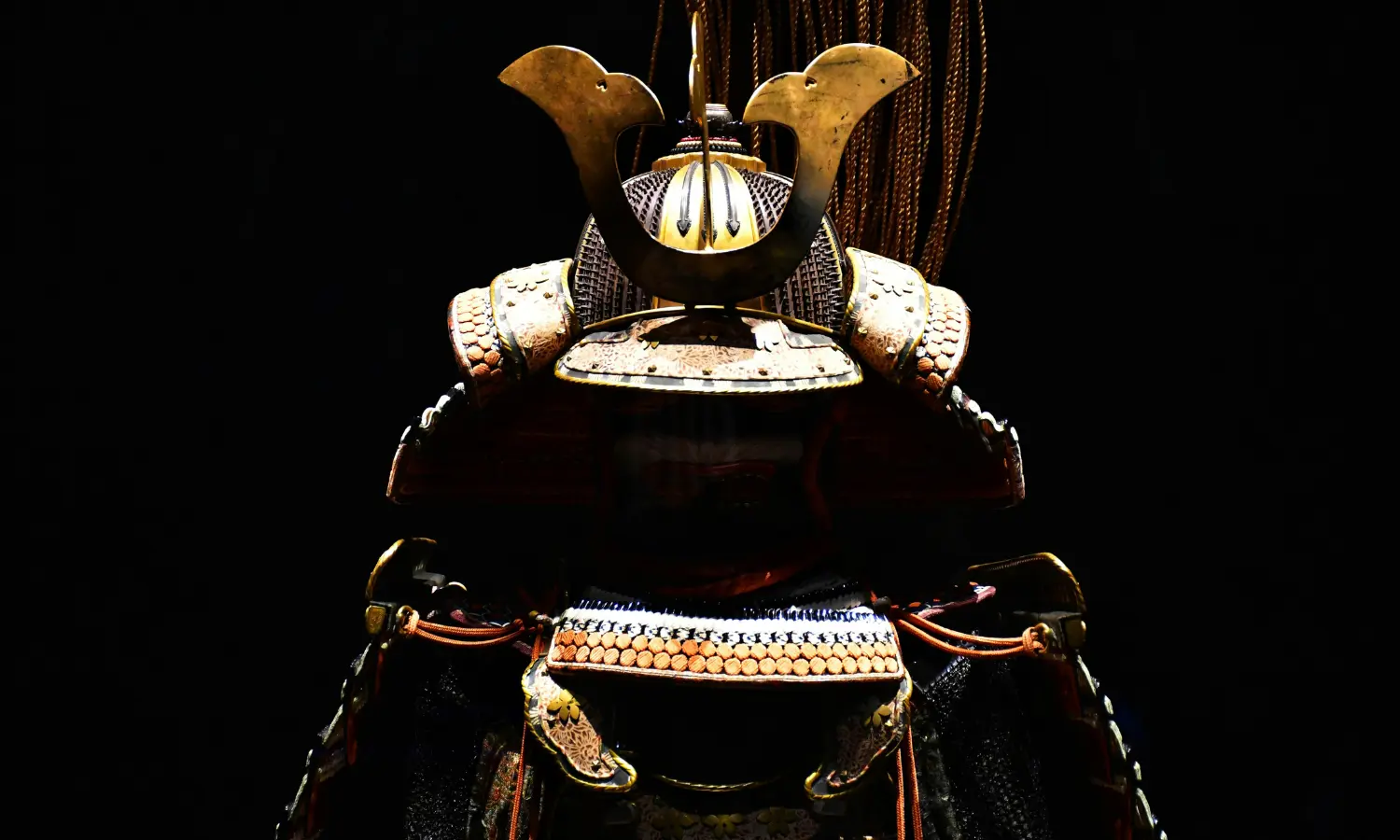
Also in September 2024, anonymous developers (who claim to have no direct connection with the Samourai team) made a fork Samourai by creating the Ashigaru wallet, with the same functionalities. A fork, in this context, is the creation of a new piece of software from the open source code of another.
To download To use Ashigaru, available for Windows, macOS, Linux and Android, you need Tor Browser, which routes your connection through multiple encrypted servers and hides your IP address. What other wallet takes privacy so seriously that it requires protection even before installation?
On its official website, the Ashigaru team makes clear the principle guiding the project: “anyone should be able to engage in peaceful, voluntary and private commerce on the Internet without tracking, surveillance or censorship”. The proposal is therefore not only technological, but also philosophical. The group is openly against digital surveillance and sees privacy as a fundamental right, especially in financial transactions.
Ashigaru has emerged as a clear attempt to maintain and improve tools that preserve financial sovereignty in an environment that is increasingly hostile to privacy.
How to have a private Bitcoin wallet
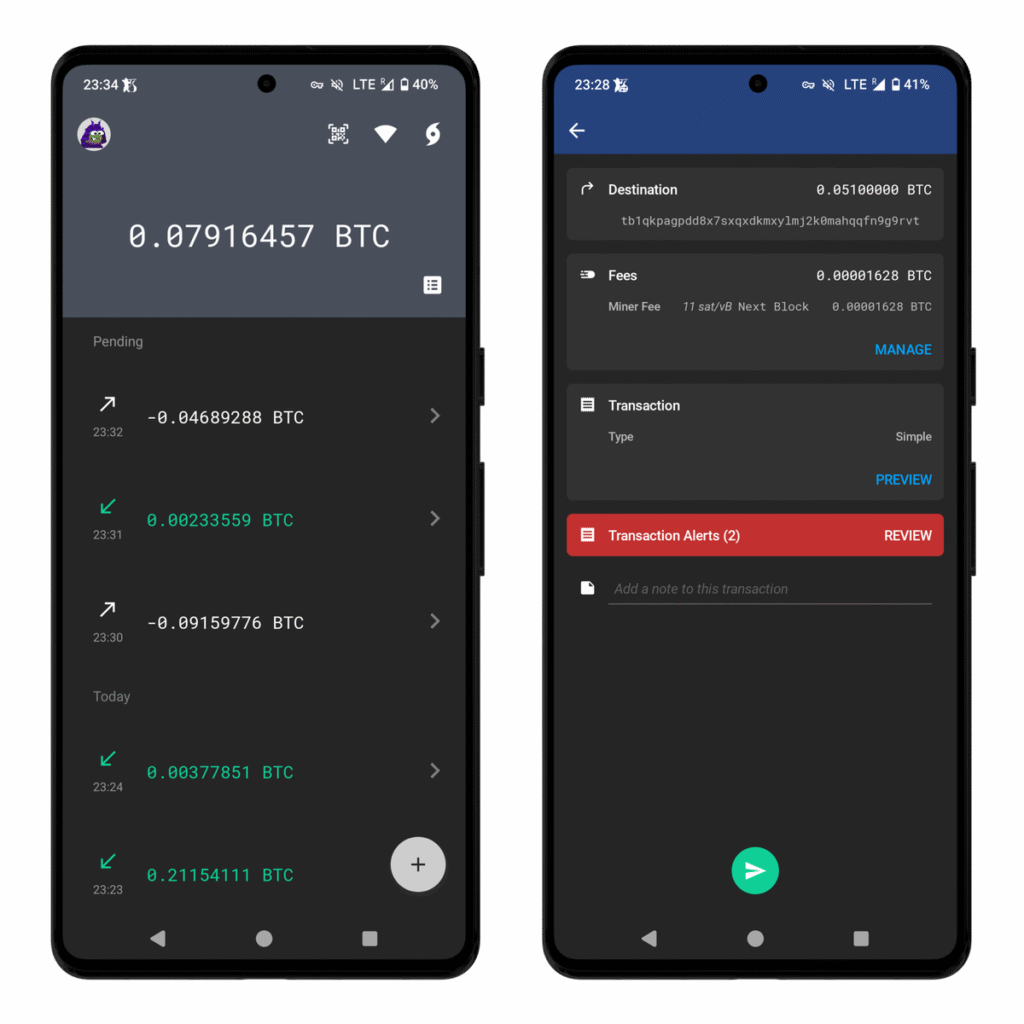
The first simple and useful feature introduced at Samourai and continued at Ashigaru is PayNym, a method for creating reusable payment codes to receive bitcoins at a new address every time.
With your wallet open, simply click on the button with the “+” symbol and select “PayNyms” and click on the share symbol. There you will see a QR Code and a text code, both of which serve as your payment code for any user who has a wallet that also uses PayNyms.
What this code does, in practice, is generate a different receiving address for each person who reads the code and tries to make a payment to you. This is a much more private way of receiving payments or donations, as it doesn't expose your other receipts and total balance to each person who sends you BTC.
The second is the Stonewall, an elegant solution to increase the number of possible interpretations of that transaction if it is analyzed by an external agent. I'll explain more about it below.
Bitcoin transactions are public, which is good for preventing fraud and increasing general trust in the network, but reveals challenges for privacy. This means that anyone can see what has happened on the blockchain, just not names, just addresses.
Even so, analysts use “heuristics”, which are nothing more than well-informed kicks, to try to find out what the transactions are about. Some common examples are:
- If a transaction has two outputs, one is probably the payment and the other is the change going back into your wallet. What's more, if one of the outputs is a more closed number like “0.00010000 BTC” and the other something more seemingly random like “0.00179202 BTC”, the first output is probably the payment and the second the change.
- If a transaction has no change, but spends all the entries in full, observers may conclude that it is a user carrying out a self-transfer, just moving their own bitcoins from one wallet to another.
- If a transaction has several entries, it is likely that they all belonged to the same user.
And the list of possible heuristics goes on...
So back to Stonewall, what it could do is transform the payment I used as an example in item 1 above, and split the change of 0.00179202 BTC into three parts, one replicating the payment of 0.00010000 BTC and the other two of 0.00084601 BTC.
This would add several possibilities for interpretation, increasing the degree of privacy for those making the payment (and also for those receiving it). To use it, you must check at the end of a transaction that the functionality is selected under “Transaction Type”.
Ricochet, already explained above, is activated in a similar way, but requires an additional fee. Another paid feature is the Whirlpool coinjoin, which comes with an additional requirement compared to the Samourai Wallet: the user now needs to use their own node to transmit their transactions via Tor.
FAQ
Can the government confiscate cryptocurrencies?
Cryptocurrencies are just as confiscable as physical cash under the mattress. Confiscation only occurs if the coins are held on exchanges or other custodian platforms, or if the user is the target of a search and seizure and hands over their keys. Those who keep their own keys have more protection, but are still subject to the law.
How can I hide my cryptocurrencies?
You can't hide assets to evade the law. What is legitimate is to increase your personal security through good practices such as using privacy-focused wallets.
Do bitcoin owners have to file a tax return?
The IRS requires a declaration for those who accumulate R$ 5,000 or more in bitcoin or other crypto-assets and charges capital gains tax on monthly sales above R$ 35,000.
Does the IRS track Bitcoin?
Yes. The IRS requires information from Brazilian exchanges and uses blockchain analysis tools to link addresses to people when there is a point of identification, such as an exchange.
Are there other options for private Bitcoin wallets?
Yes. Some other Bitcoin wallets have similar privacy features for their users, such as Sparrow, Wasabi, Electrum, or hardware wallets like Ledger, Trezor and ColdCard.




 English