









O seu guia para a soberania!
How to secure your heirs with Bitcoin
Your sovereignty doesn't end with you, understand how to leave your inheritance in cryptoassets.
Share your love
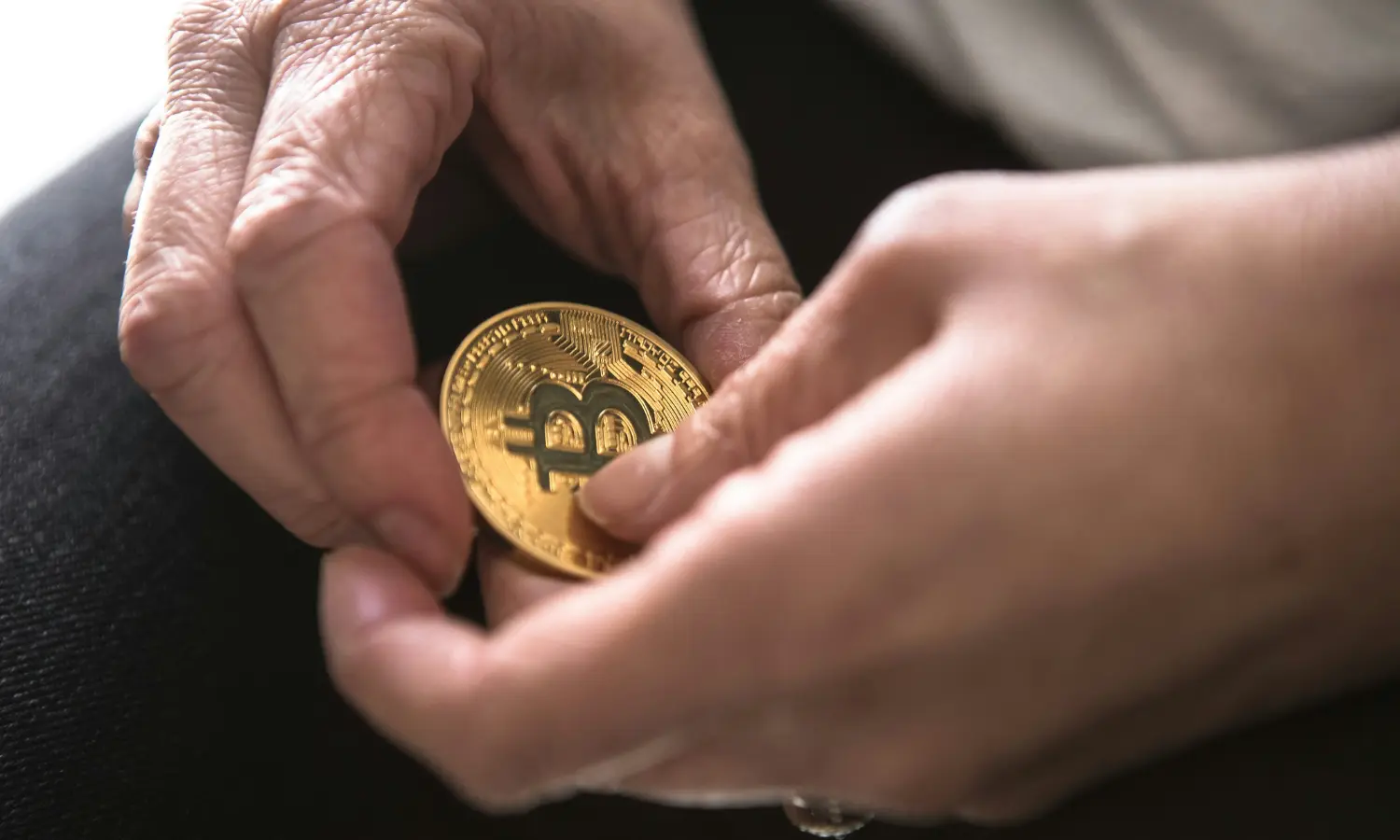
When talking to very successful people about Bitcoin, the question “what about my heirs?” often comes up.
Listen to the article:
0:00
0:00
As we get older (and increase our assets), I imagine it will be a concern for everyone who owns cryptocurrencies.
The challenges are diverse. Self-custody can be so secure that, without an inheritance plan, you run the risk of ‘taking’ your coins with you when you pass away - so planning is essential.
In this article we'll look at the problems of traditional inheritance, how Bitcoin solves some of them, the new difficulties that Bitcoin creates and practical ways of mitigating them.
Sovereign
Pay
Your pocket Swiss bank.
Copper via PIX anonymous and receive it at Bitcoin, dollar or balance in international card.
Knowing
Only 9 vacancies
Inheritance in the traditional system
When someone passes away with money in the bank, investments in stockbrokers and real estate, the family is usually faced with the same problem:
- An inventory that could take years
The assets left behind are tied up for months or even years. The more contentious the probate process, the worse. Heirs often see fees and interest on the deceased's debts squandering the assets left behind.
- High costs
Lawyers, fees, taxes, deeds, registration... Add it all up and you can reach 20% of the entire inheritance with the bureaucracy.
- Lack of control
Ultimately, the state has the final say on what is released, when it will be released and how it will be divided. You are not in control of what is yours.
The problems Bitcoin solves
With a self-custody asset like Bitcoin, you can take back control completely. But there are alternatives for all types of profiles.
Here are some of the possible advantages of leaving at least part of your inheritance in bitcoin to your heirs:
- The inheritance is available immediately
Nobody freezes, nobody blocks, nobody vetoes the transfer. The money is available the moment the heir gains access to the deceased's Bitcoin wallet.
- Very low cost
The distribution of goods can be carried out in just one transaction. The cost drops from around 20% to a few hundred satoshis (a few cents in BTC).
- Total control possible
Bitcoin or any other cryptocurrency in brokerages, investment funds or ETFs follows the same rules as any other traditional investment. But if held in self-custody, control over the fate of the coins is absolute.
Nothing prevents the inheritance from being handed over privately, even overcoming bureaucratic rules such as that of necessary heirs (minimum 50% of the inheritance for descendants, ascendants and spouse, regardless of the will of the deceased).
- Independence from the government
If in self-custody, bitcoin cannot be confiscated or retained by the state in the inventory process. Access depends exclusively on who has the keys.
At the same time, this creates challenges. A balance has to be struck: neither making access so easy that an attacker gets the keys, nor so difficult that his heirs can't recover them.
The pains of leaving Bitcoin to heirs
The Bitcoin solution is not magic. Numerous problems can be solved, but difficulties also arise:
- A lost private key is a lost inheritance
Because it is decentralized, Bitcoin does not have a “password recovery” service like a bank.
Currency losses are not uncommon. Chainalysis analysts estimated in 2018 that around 2.3 to 3.7 million BTC would be lost forever.
To leave your cryptocurrencies to your heirs, a will is not enough, but planning is essential.
- Risk of invasion during life
The other side of the coin is making it too easy and compromising the security of your assets while you're still alive. If the keys are too accessible, your coins are at significant risk.
- Technically unprepared heirs
If there is no preparation, your heirs may not understand portfolio recovery or, in some cases, not even know about your coins.
Even if the heirs seek knowledge later, they may ask the wrong person for help or make mistakes that jeopardize everything, which is why the succession plan must provide for technical support and clear instructions.
The main alternatives for Bitcoin inheritance
The positive side is that there are already practical solutions to ensure that your heirs have access to your bitcoin, minimizing these risks.
We have separated the possible plans according to the investor profile or problem to be solved.
You'll probably find an option below that makes sense for your case - or, at the very least, the paths proposed will make you think and help you arrive at a suitable solution.
- Shared custody (multi-signature)
A valid concern is the difficulty of the heir accessing your wallet, in the case of bitcoin in self-custody.
For this, there are business solutions such as Nunchuk, Unchained Capital e CasaHodl. They are all similar, but with their own particularities.
One of the models they offer is the 2-of-4 multisig. This means that the wallet will have 4 private keys, and at least two will be needed to move the coins.
In this scheme, you will create three of the four keys, while the company creates and holds the fourth. You will leave the first key in the possession of the heir and keep the second and third.
This means that during your lifetime, only you will use your bitcoin wallet. After your departure, the heir will need another key in addition to the one they already hold, which could be yours or the company's backup.
There are also other schemes that may make more sense for other profiles, such as multisig 2-of-3, with just one key for you, another for the heir and the spare key with the company.
Finally, they also offer plans with specialized support and step-by-step guidance for laypeople.
- AdvantagesThe best way to do this: they add a high degree of security, with dedicated support, and can reduce the risk of the heir stealing from you while you're still alive.
- DisadvantagesNunchuk: costs from 250 to 750 dollars a year and some reduce your privacy (all require KYC, except for Nunchuk).
- Singlesig + password solution
If the multi-signature wallet is too complicated, you can perfectly secure your inheritance wallet with a single signature and a password.
Many wallets offer the option of encrypting your key with an additional password. This means that recovering your bitcoins requires not only the usual 12 or 24 words, but also a manually chosen password.
This makes it possible to pass on your inheritance securely by separating the seed from the password. One option is to give the seed to the heirs and leave the password in your will.
This involves a certain level of trust, as whoever has the will could collude with the heirs to steal from you while you're still alive. If this is a concern, simply send the password to the children via a Dead Man's Switch, which is basically a message triggered after your death.
- Advantageslow complexity, low cost, high security and, if done with professional help, dedicated support.
- DisadvantagesThis requires technical knowledge from both you and the heir, although it can be solved with professional help.
If you want to secure your inheritance with this simple solution, Soberano shows you how to set up the whole process, including scheduling a message with clear instructions to the heir(s) on how to recover the wallet.
With the complete step-by-step process, you'll have peace of mind knowing that your inheritance will be transferred at a very low cost, while you safely enjoy your bitcoins for life. Fill in the form below to contact Soberano to find out more:
- Split your private key and distribute to heirs using Shamir
An alternative for those with many children. Your wallet's private key can be divided into several parts using Shamir backup.
Shamir is a cryptographic solution that allows you to split the private key into several parts, only a few of which are enough to recover the wallet (similar to the multisig solution explained above).
The parts can be distributed via SafeKeys, a kind of pen drive that stores this important information. Alone, they mean nothing, but together they recover your wallet balance.
The platform created by SafeKey and Inheriti allows you to build this structure in a simple way, and adds a Dead Man's Switch to “unlock” the inheritance.
In other words, the data on the devices distributed to the heirs is inaccessible until the inheritance is activated. And it is activated by the passage of a certain amount of time, without you having to postpone the deadline yet again.
In theory, you will only stop delaying the start of the inheritance process when you pass away. This ensures that they don't try to spend your coins prematurely.
- Advantageswhile alive, you remain the sole holder of your private key.
- DisadvantagesYou need to buy SakeKeys for each of the heirs and hire Inheriti's platform. It also requires some technical knowledge to ensure that the inheritance is successfully redeemed.
- Simply leave a backup with the heir
If you have complete trust in your heir, both in terms of honesty and technical knowledge, the easiest solution is to leave a backup of your single-signature wallet with him.
This alternative is analogous to the transfer of assets while you are still alive, but with lifetime usufruct for the donor. Even for other assets, there are tax advantages to this solution.
But it's important to be aware of a few points, as disagreements can happen. If you have more than one heir, this path needs to be very well discussed in order to work.
Alternatively, this backup of the private key can be delivered via a manual Dead Man's Switch, messages that can be scheduled to be sent and postponed indefinitely, until you disappear and the schedule is fulfilled.
It is worth noting, however, that additional care must be taken with this type of solution, as it is subject to accidental triggering of the message, technical problems that may result in it not being triggered or an increased risk of theft (depending on the information shared and where it is sent).
- Advantageslow cost, low complexity.
- DisadvantagesThis requires technical knowledge on the part of the heir and adds a layer of insecurity, as your only key is exposed in more than one place. And your heir could take your money before your death or lose the key to an outside attacker.
- Traditional bitcoin investment
Although I'll go back a few houses to solve the problems mentioned in this article, I think that for some profiles it's best not to enter uncharted territory.
It is perfectly acceptable to invest in bitcoin in the traditional way, and the inheritance will be similar to many other types of assets.
If this is your profile, you will probably invest through ETFs such as QBTC11 or HASH11; or shares in companies on the market such as MicroStrategy (MSTR) or OrangeBTC (OBTC3); or cryptocurrency exchanges.
In the case of investments in Bitcoin through brokers, ETFs or shares, succession follows the traditional rules: in the probate process, the judge can order the assets to be blocked and only release them at the end of the division of assets.
- Advantageslow complexity and legally secure.
- DisadvantagesIt doesn't solve the problems mentioned at the beginning of the article: it's expensive and takes a long time.
Conclusion
Bitcoin gives you freedom and sovereignty, but demands responsibility. It already solves several classic problems in the world of inheritance, but it creates others that you need to anticipate.
With organization and a process designed specifically for your situation, you can ensure that the assets you have built up really go to those you love, without depending on the state.
Plan ahead, because you never know what tomorrow will bring.
Your bitcoin is only really safe when you are safe... and so are your heirs.





 English