Breaking News

Popular News



Your Guide to Sovereignty
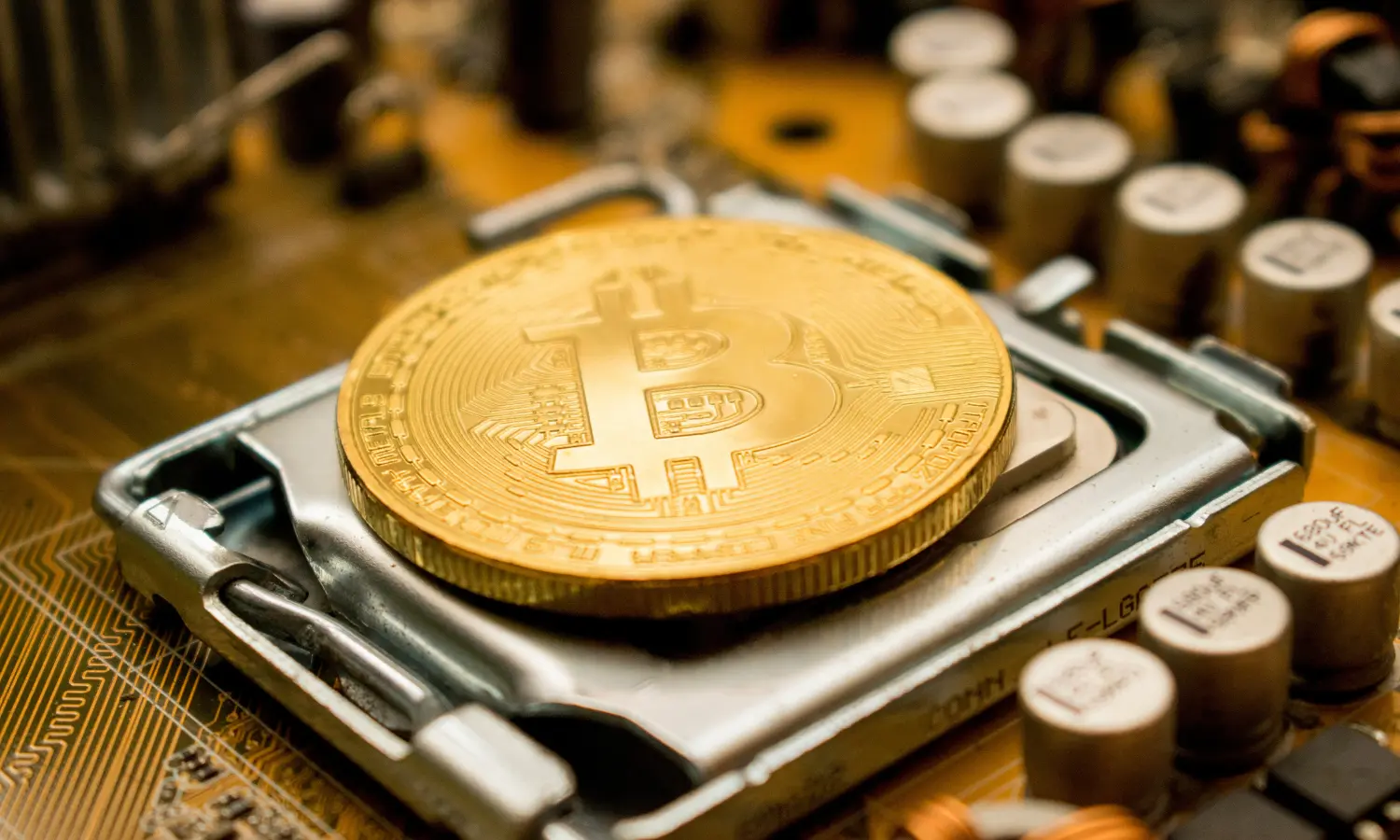
Paraguay has found a solution to a problem that has been growing for years: what to do with the thousands of pieces of Bitcoin mining equipment confiscated in operations against the illegal use of energy?
The answer from the National Electricity Administration (ANDE), the state-owned company responsible for the Paraguayan electricity sector, is to mine Bitcoin (BTC).
On March 5th, the American company Morphware, specialized in digital infrastructure and cryptocurrency mining, has announced the signing of a Memorandum of Understanding (MOU) with ANDE.
The agreement establishes a formal cooperation framework to develop initiatives linked to digital assets, advanced processing infrastructure and strategic technological opportunities linked to Paraguayan energy.
The partnership specifically includes the exploitation of Bitcoin mining as a opportunity on a national scale within Paraguay's energy and digital infrastructure.
The president of ANDE, engineer Félix Sosa, confirmed told local newspaper ABC Color that they are actually working on the project. The starting point is a pilot with 1,500 ASICs, These are high-efficiency chips designed exclusively for Bitcoin mining, currently in storage after being seized by ANDE itself in operations against illegal energy consumers.
Paraguay is one of the countries with the cheapest electricity in the world. The reason is geographical and political: the country co-administers the Itaipu Power Plant with the Brazil, and its generation quota is much higher than domestic consumption.
The surplus energy, which was historically sold at low prices to Brazil via contract, has become an opportunity for Bitcoin mining.
It is no coincidence that Paraguay today accounts for 4% of all Bitcoin mining in the world, according to data of the Hashrate Index, second only to the United States, Russia and China. According to ANDE itself, legal private mining is already equivalent to 1.4 units of Itaipu in consumption.
The problem is that along with the growth of legal mining came the growth of illegal mining. Clandestine operations stole energy from the grid, overloading ANDE's infrastructure and causing damage to the system. The seizures of equipment accumulated, and now that same equipment will be the initial asset of the state project.
An important detail of the project: the Paraguayan government does not intend to accumulate Bitcoin. The strategy, according to sources, is to make a hedge on the futures market - selling the BTC that will be produced in advance to fix the price and eliminate the risk of volatility.
In practice, this treats the operation as a selling electricity in another formatInstead of exporting raw energy, Paraguay converts it into Bitcoin and sells the result. Price risk is taken out of the equation; what remains is the operating margin of using cheap energy to produce a globally traded asset.
Kenso Trabing, founder and CEO of Morphware, described the logic as follows: redeploy miners on sites controlled by the utility company transforms idle electricity into productive computing that simultaneously serves the Bitcoin network and the global digital economy.
Paraguay is not alone. What is happening in Asunción is part of a wider movement: governments around the world are discovering that Bitcoin is a strategic asset that are worth accumulating (or at least not discarding).
For the time being, the United States is in the lead. The US federal government has accumulated around 328,000 BTC - the largest known state reserve in the world - mainly through confiscations in criminal cases such as Silk Road and the Bitfinex hack.
In March 2025, Trump formalized this with the creation of the Strategic Bitcoin Reserve, The new law, which stipulates that these BTC are to be held in permanent custody rather than auctioned off, as was previously the practice.
El Salvador took the most direct route and adopted Bitcoin as legal tender in 2021, and has been buying it systematically ever since. The country now holds around 7,500 BTC in reserve. And despite pressure from the IMF to abandon the policy, El Salvador maintained the bitcoiner direction.
Bhutan is a quieter case. The small Himalayan kingdom began mining Bitcoin years ago using the surplus from its abundant hydroelectric generation, through the sovereign wealth fund Druk Holding and Investments. No announcements, just continuous mining. The result: approximately 13,000 BTC accumulated, equivalent to more than 28% of the country's GDP. It's the closest model to what Paraguay is trying to build now.
China, curiously, is the second largest government holder of Bitcoin in the world, not by declared strategic choice, but by confiscation. It is estimated that the Chinese government controls around 190,000 BTC seized mainly from the PlusToken pyramid scheme. The destination of these assets has never been made clear.
The UK has approximately 61,000 BTC seized from a money laundering case. Ukraine received donations in Bitcoin and Ethereum after being invaded by Russia. Iran goes further: by law, licensed miners are obliged to sell their output directly to the Central Bank, which uses the cryptocurrency to circumventing sanctions in international transactions.
Pakistan has announced the creation of a strategic Bitcoin reserve in 2026, with plans that include mining using surplus energy. Still at an early stage, but with declared intent.
And the Brazil? There is Bill 4501/2024, which proposes a Sovereign Strategic Bitcoin Reserve (RESBit) allocating up to 5% of Brazil's international reserves in BTC. However, the proposal has stalled without much expectation of approval. The Central Bank is moving forward with crypto regulation, but in the direction of control, not accumulation. While Paraguay turns confiscated equipment into state mining, Brazil debates whether or not to regulate the custody of digital assets.
The pattern that emerges from this list is clear: countries with cheap and surplus energy are mining (Bhutan, Paraguay, Pakistan). Countries with large seizures are deciding not to sell (USA, UK, China). And ideological pioneers keep buying (El Salvador). There are three different paths leading to the same place: Bitcoin on the state balance sheet.
What do you think? Comment in our X or Instagram and take the opportunity to follow us on these social networks!
 Português do Brasil Português do Brasil
  English
 Español