Breaking News



Popular News






Your Guide to Sovereignty

What do Peter Thiel, David Sacks, Larry Page, Sergey Brin, Chamath Palihapitiya and Travis Kalanick have in common? They are all famous billionaires who are talking about leaving California because of a possible new wealth tax.
Lawmakers in the US state of California have been discussing a new tax on billionaires since the end of last year. But the side effect of the proposal arrived even before the law was passed; the rich are packing their bags to leave.
The project, called Billionaire Tax Act, provides for taxation of 5% on large fortunes for residents with shareholders' equity of more than US$ 1 billion.
A high-end real estate agent reported to Fox Business that several of his clients are considering leaving California in anticipation of this new tax. “That would be a tax of US$ 5 billion for me,” said one of Julian Johnston's clients, a broker with The Corcoran Group.
Some of the best-known names talking about leaving the state include:
Meanwhile, other executives are going against the grain, such as Nvidia CEO Jensen Huang, who declared that he was staying in California because Silicon Valley's infrastructure and talent ecosystem outweighed any taxes. But will the talents withstand any tax?
It is possible that the exits are not definitive, and not necessarily influenced only by the discussion of a new tax. The taxation of 5% may have been just the last straw for some who were already considering leaving the state.
The proposal awaits the next legislative stages and, possibly, popular consultation.
The fear of the new tax is not limited to consolidated billionaires. Founders of startups, investors and entrepreneurs in the early stages consider leave California before their companies reach their first billion.
The central fear is that the tax on net worth, which takes into account shares, will force the new billionaires to sell their holdings and affect their income. control over their own companies. This scenario has led many to review their plans for growth, fundraising and even the location of their new businesses.
Another factor is that if they start taxing billionaires now (and even many leave), millionaires are the likely next targets. This environment of fear and uncertainty is detrimental to growing businesses.
As a result, states such as Texas and Florida emerge as alternatives more attractive, offering regulatory environments that are considered more stable.
In its eagerness to raise more money, California risks losing talent and investors, everything that makes Silicon Valley the global hub of technology and entrepreneurship.
It's not just today that the American state “expels” the richest people. Since 2013 relevant contributors come out from California for tax increases.
And it's not as if the Californian government can afford to lose the richest. The richest 1% pays about 50% of all California income tax, This makes revenue extremely sensitive to the departure of this group.
Expelling the rich is not exclusive to California either. Brazil is following suit.
In Brazil, companies of different sizes have been adopting a similar strategy in the face of the increased tax burden, regulatory complexity and legal uncertainty.
The answer has been clear: change address.
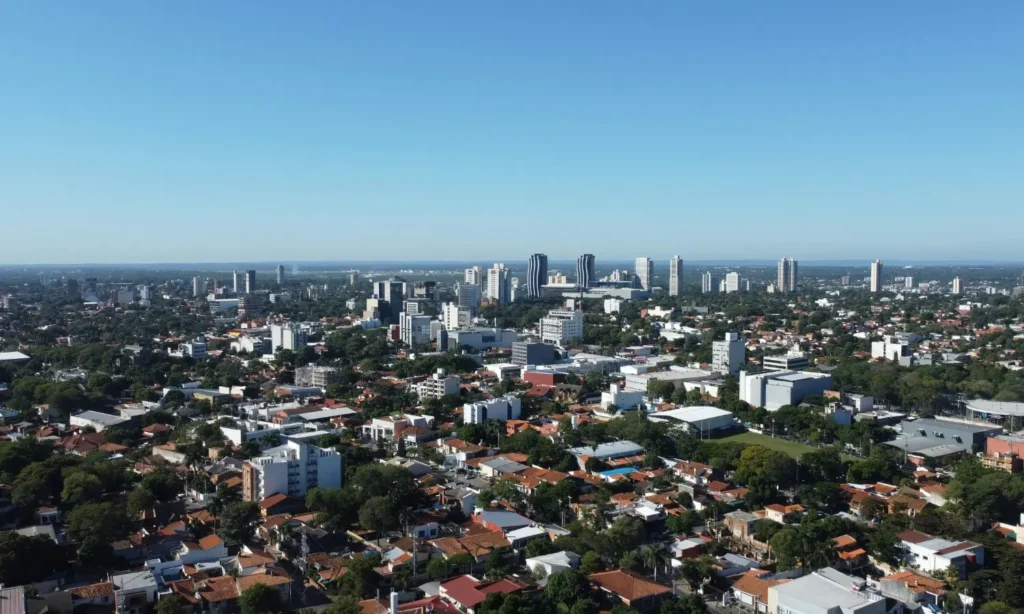
O Paraguay became the main destination for this flow. The country offers significantly lower taxes, reduced bureaucracy and a regulatory environment that is considered more predictable for those who produce, invest and create jobs.
With a corporate tax of just 10%, With cheap energy, boosted by the Itaipu plant, and simplified regimes for exporting companies, the country began to attract industries, holding companies, technology companies and commercial operations that had previously been based in Brazil.
These are not isolated cases or small companies. Among the most emblematic examples of Brazilian companies that have transferred operations to Paraguay are:
In common, these companies point to lower taxes, clearer rules and greater predictability as decisive factors. Just like in California, capital doesn't disappear — only changes jurisdiction when the cost of staying becomes excessive.
The collateral effect of fiscal policies is not just symbolic; the increase in costs risks driving away investment. In more extreme cases, as counterintuitive as it may seem, tax increases can reduce state revenue.
The parallel is direct. While governments are betting that richer taxpayers “will be able to pay more”, businessmen are making cold calculations. And when the equation doesn't add up, the decision isn't political or ideological, it's economic.
The result, both in the American West and in South America, is the same: more unstable revenue, loss of competitiveness and an increasingly unattractive environment for those who want to grow.
If you feel that the Brazilian tax environment is hurting your business right now, Soberano can help you take your business to Paraguay. Fill in the form below and speak to one of our experts:
 Português do Brasil Português do Brasil
  English
 Español