Breaking News




Popular News






Your Guide to Sovereignty

The Joint Chiefs of Global Tax Enforcement (J5), a group that brings together tax authorities from Australia, Canada, the Netherlands, the United Kingdom and the United States, has published two reports aimed at investigative forces: one on crypto payment processors and another on negotiating tables over-the-counter (OTC).
Both documents start from a similar diagnosis: the growing adoption of services linked to cryptoassets could represent risk to the integrity of the global financial system, especially with regard to tax evasion and money laundering.
The central argument is supported mainly by the increase in the number of Suspicious Activity Reports (SARs) related to these services.
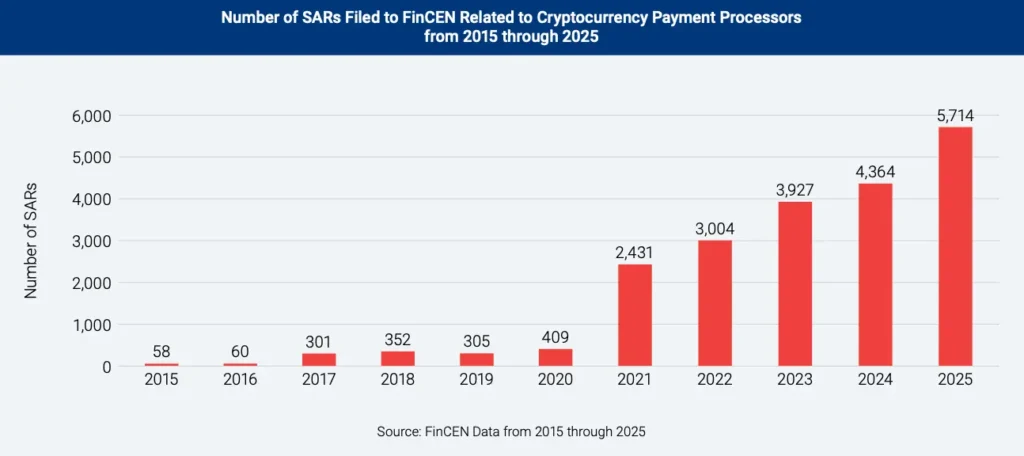
SARs are reports that financial institutions are obliged to send to the authorities when they identify a transaction or behavior that may be linked to illicit activities.
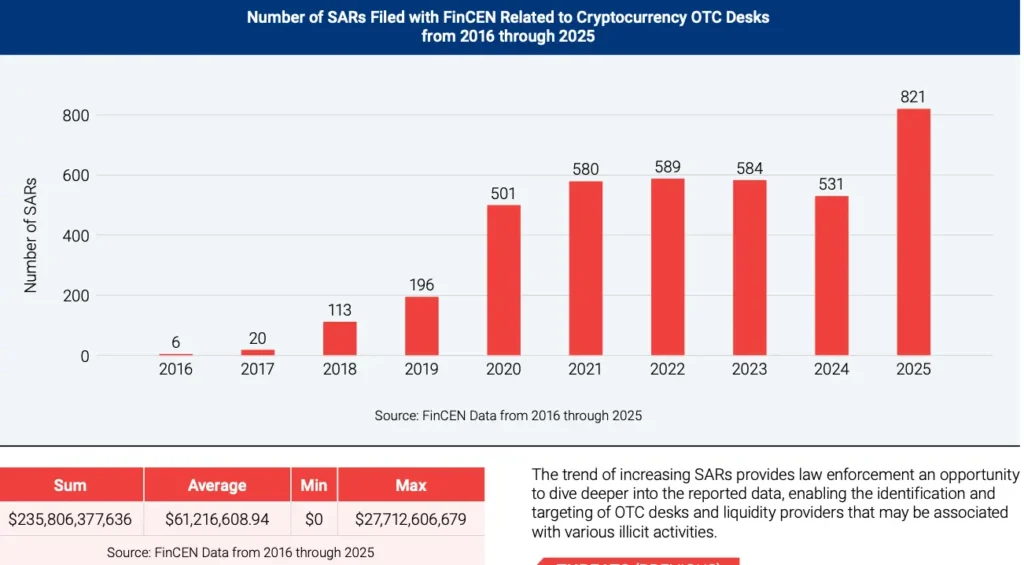
According to J5, the growth of SARs would indicate a worrying trend that requires increased attention from regulatory agencies, increasing vigilance for cryptocurrencies.
But this interpretation did not go unchallenged.
In an article published by The Rage, J5's approach is critically analyzed. The central point raised is simple but relevant: SARs are not convictions, nor are they proof of a crime - they are just notifications of activity considered atypical or suspicious by financial institutions.
The growth of 1.000% in the number of SARs may simply reflect greater use of cryptocurrencies, This could mean greater caution on the part of banks and compliance companies, or even greater regulatory sensitivity. Not necessarily a proportional increase in illicit activity.
In other words: the volume of alerts may indicate an expansion in the sector - and not necessarily an expansion in crime.
In addition, the J5 reports use terms such as “can make it easier”, “may pose a risk” e “potential systemic threat”. This language is common in financial intelligence documents, the aim of which is to map vulnerabilities before they become consolidated.
But there is still a sensitive point: when institutional reports present hypotheses as structural trends, the public impact can go beyond the original technical intention. Potential risk is now interpreted as proven risk.
In the case of OTC desks, for example, the group points out that internal transactions may not be directly visible on the public blockchain. This is technically correct. However, this characteristic is also associated with the operational efficiency and liquidity of large operations.
“It's almost trivial to point out that if a system is genuinely faster, cheaper and more accessible to ordinary, law-abiding users, it will also be faster, cheaper and more accessible to those with illicit intentions. Criminals don't live in a parallel universe without access to convenient tools,” said the article in The Rage.
An important aspect highlighted in the critique is the wider context. The global money laundering prevention system, based on frameworks such as the Bank Secrecy Act and AML/KYC regimes, already generates millions of reports a year.
The expansion of this framework to cover each new crypto intermediary - be it a payment processor or an OTC desk - also increases the collection of sensitive financial data, creating an immeasurable risk to user security.
The question that emerges is not just about fighting crime, but about proportionality:
what is the right balance between prevention and excessive monitoring?
 Português do Brasil Português do Brasil
  English
 Español