Breaking News



Popular News





Your Guide to Sovereignty
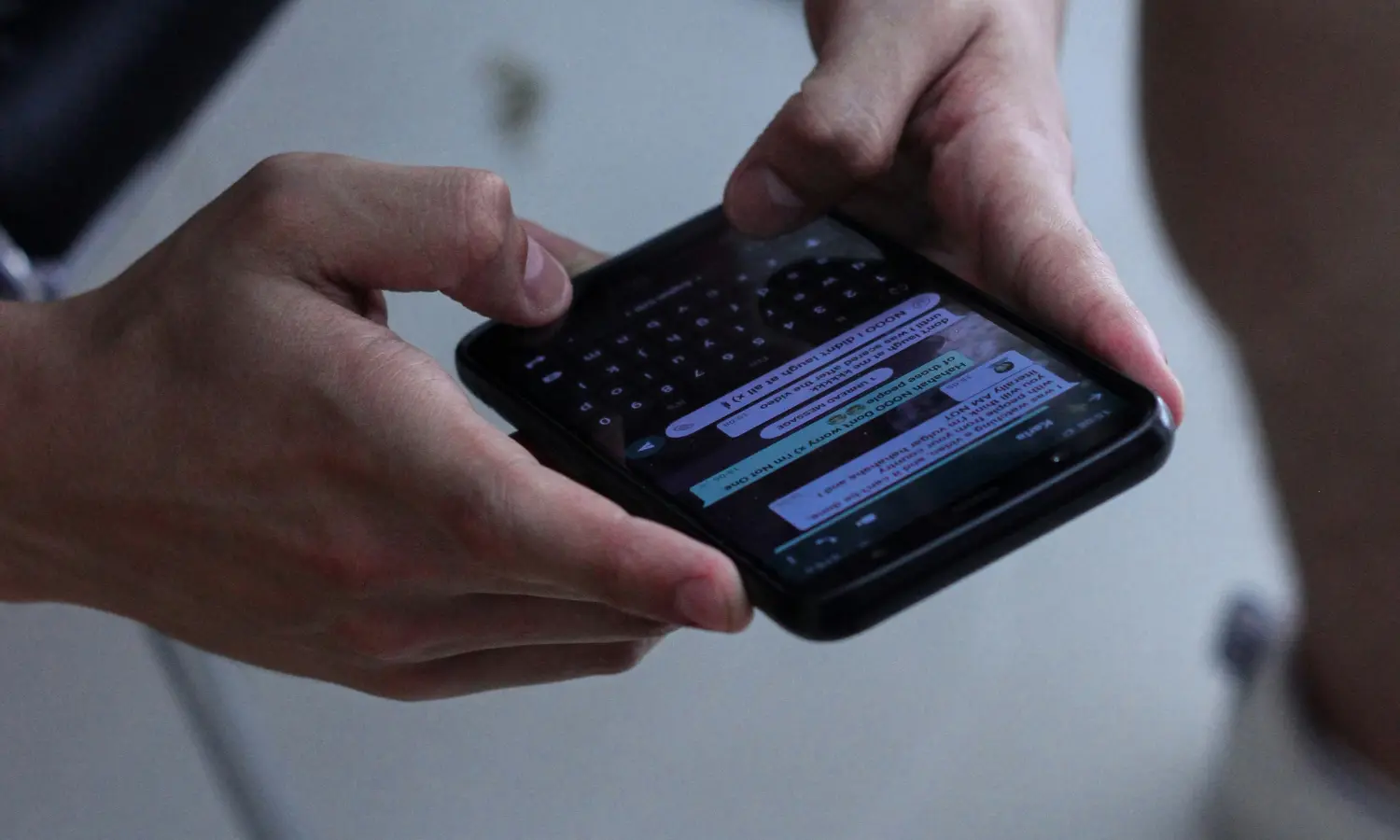
An international group of authors has filed a lawsuit against Meta, the parent company of WhatsApp, accusing the company of making misleading statements on the level of privacy and security offered by the messaging app.
The lawsuit was filed on January 23, 2026 in a US district court in San Francisco and directly questions one of WhatsApp's main promises: privacy.
In recent years, Meta has introduced end-to-end encryption as a core element of WhatsApp. According to the company, this system ensures that only the sender and the recipient of a conversation can access the content of the messages, This prevents any kind of reading by third parties.
End-to-end encryption ensures that not even the people behind WhatsApp can read your messages private. Or at least that's the promise.
The application reinforces this message within conversations, informing users that only the people in that chat can read, listen to or share the content exchanged. The company also claims that this type of protection is enabled by default.
The plaintiffs, however, dispute this narrative. The lawsuit claims that Meta and WhatsApp store and analyze the content of communications and that, in practice, they are able to access messages that are supposed to be private.
The company is accused of misleading billions of users by promoting a sense of confidentiality that doesn't correspond to reality.
The group of authors includes people from countries such as Brazil, Australia, India, Mexico and South Africa.
The complaint mentions the existence of whistleblowers who would have helped reveal these practices, although the lawsuit does not provide details about who these sources were or what their exact participation would have been.
The plaintiffs' lawyers have asked for the case to be recognized as a class action, which could significantly broaden the scope of the lawsuit.
On Monday (26), two notable public figures from the sector spoke out about the case: the founder and CEO of Telegram, a messaging app. WhatsApp competitor and the owner of X, Elon Musk. In an acidic message shared on X, Pavel Durov said:
“You have to be stupid to believe that WhatsApp will be safe in 2026. When we analyzed how WhatsApp implemented its ‘encryption’, we discovered several attack vectors.”
Musk also wanted to leave his message, reaffirming the supposed insecurity of WhatsApp:
“WhatsApp is not secure. Even Signal is questionable.”
Other market participants disputed Durov and Musk's criticisms. Read more about the war of the messaging apps in our post about the SimpleX.
In reply, Meta classified the lawsuit as unfounded. A company spokesman said that the case lacks merit and that the company intends to seek sanctions against lawyers responsible for the prosecution.
According to Meta, any claim that WhatsApp messages are not encrypted is false. The company stresses that the app has been using an end-to-end encryption system based on the Signal protocol, which is widely recognized in the digital security community, for about a decade.
“This lawsuit is a frivolous work of fiction,” said the WhatsApp spokesperson.
WhatsApp has publicly stated that messages in the app are private and that it uses the open-source Signal protocol to encrypt them.
“Encryption happens on your device. Messages are encrypted before they leave your device. Only the recipient has the key to decrypt the messages. The cryptographic keys are not accessible to WhatsApp or Meta. Any claims to the contrary are false.”
 Português do Brasil Português do Brasil
  English
 Español