Breaking News




Popular News




Your Guide to Sovereignty
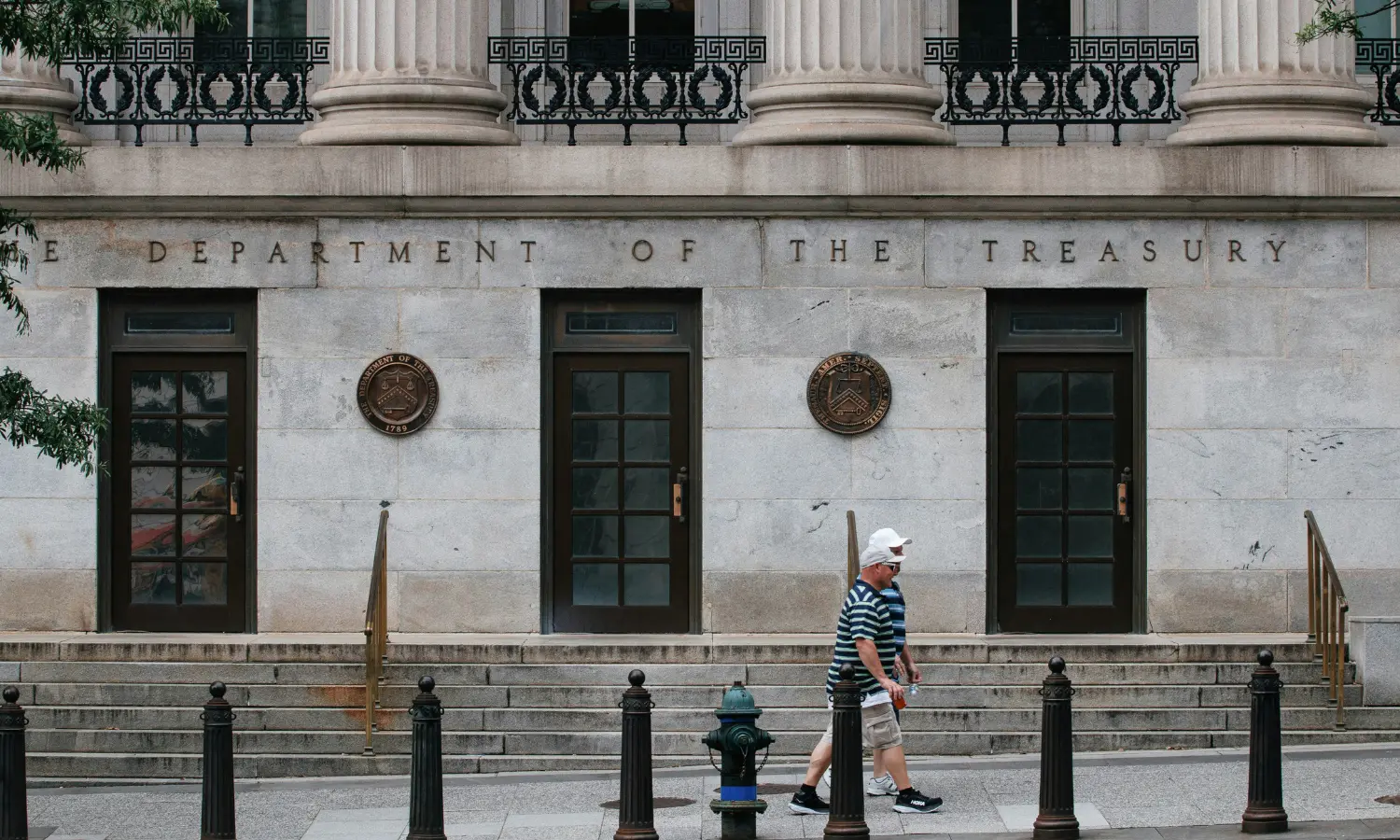
On March 9, the US Treasury Department delivered to Congress a 32-page report produced under the mandate of the GENIUS Act, sanctioned by Trump in July 2025. Among technical analyses on artificial intelligence, digital identity and blockchain tracking, there was a statement that caught the attention of the Bitcoin community:
“Individuals can use mixers to protect sensitive information about personal wealth, business payments or charitable donations by preventing it from appearing on a public blockchain.”
The document recognizes, for the first time officially and in public policy language, that privacy tools have a legitimate purpose. However, a closer look reveals that the document is not as great a victory for privacy as it might seem.
Recognizing legitimate uses takes up a few paragraphs. But the rest of the section on mixers is extensive in describing the problem from the state's point of view: criminals linked to North Korea who used mixers to launder US$ 2.8 billion in stolen assets between 2024 and 2025, the US$ 1.5 billion attack on the Bybit exchange, the use of bridges and stablecoin swaps to obscure traces.
The document does not propose new immediate restrictions on non-custodial mixers, but neither does it shelve the proposal that has existed since 2023. The report explicitly states that the Treasury will not finalize FinCEN's so-called “mixer rule” now, and refers to the 2025 Presidential Task Force, which called for “careful evaluation of privacy and illicit finance risks.”
That detail matters. As documented by The Rage, In September 2025, the director of FinCEN confirmed that the Treasury was working on finalizing this rule. And it goes far beyond what the name suggests.
FinCEN's 2023 proposal, technically founded on Section 311 of the Patriot Act - which allows the Treasury to classify categories of transactions as “primary money laundering concern” - would frame them as suspicious, among other things:
Some of these categories describe common behaviors of any cryptocurrency user, not just those who operate mixers or coinjoins. As CoinCenter noted at the time of public comments on the proposal: if this standard were applied to physical currency transactions, any payment in cash would be a “primary money laundering concern.”
The March report does not end this rule. But it doesn't cancel it either.
In addition to the mixers, the Treasury report contains a set of legislative recommendations for decentralized finance (DeFi) that deserve attention:
And perhaps most importantly, FinCEN should evaluate whether and how its existing guidelines on the digital asset sector - including those issued in 2013 and 2019 - should be repealed, modified or updated to reflect legislative and regulatory changes.
It is precisely the 2013 and 2019 guidelines that established that custody is the central criterion for classifying a service as a money transmitter. Putting them “under evaluation” means that the only legal shield that the founders of the Samourai Wallet had - and which was ignored by the New York prosecutor's office - can be formally eliminated.

The Samourai Wallet was a non-custodial Bitcoin wallet focused on privacy. Its founders, Keonne Rodriguez and William Hill, were convicted of operating as money transmitters without a license - based on the argument that charging fees for the use of software would be sufficient for this classification, regardless of custody.
What the Treasury report does is reaffirm, on paper, that legitimate uses of privacy tools exist and that custody remains a relevant criterion. But at the same time it recommends re-evaluating the very guidelines that support this position.
As we previously published in Soberano, The New York prosecutor's office had consulted FinCEN itself before the indictment - and received the answer that Samourai was not a money transmitter. The government ignored that response, hid it for a year and indicted the founders anyway. Now, the report signals that the guidelines on which FinCEN's response was based could be revised.
What this creates is a situation in which the document recognizes the legitimacy of using privacy tools with one hand, but with the other proposes the legal mechanisms that, if implemented, would make this recognition irrelevant.
Read accurately, the Treasury report is not yet a victory for privacy. But neither is it a declared defeat. It is a transitional document that:
Recognize, without recommending immediate new restrictions, that mixers have legitimate uses and that custody is a relevant criterion.
Does not finish FinCEN's mixer rule, but is not abandoning it. And the White House has already called for its completion by 2025.
Recommends to Congress to expand the Patriot Act to digital assets, create new types of obligations for DeFi, and reevaluate FinCEN's 2013 and 2019 guidelines.
The practical outcome will depend on what Congress does with these recommendations, what FinCEN decides about the mixer rule and how the courts continue to interpret concepts such as custody and money transmission.
Meanwhile, the creators of the Samourai Wallet are in jail on the basis of a legal theory that the Treasury itself, in careful language, acknowledges is problematic - without the report making any mention of the case.
Another similar case is that of Roman Storm, co-founder of Tornado Cash, a non-custodial mixer that ran on the Ethereum network. In August 2025 he was convicted on only 1 of the 3 charges: operating a money transmitter without a license. The jury did not reach a verdict in the other two cases (money laundering and sanctions violations). Today he is free on bail and asks for a retrial for the two unresolved charges.
The family of the Samourai developers has created a petition on Change.org to ask for Trump's presidential pardon, and Roman Storm collecting donations for their legal defense.
 Português do Brasil Português do Brasil
  English
 Español