Breaking News


Popular News




Your Guide to Sovereignty

With the sudden rise in tensions in the Middle East, the cryptocurrency market reacted almost instantly. Bitcoin (BTC) even lost the US$ 64 thousand level after news of a attack conducted by Israel, with the support of the United States, against Iran - an event that increased global geopolitical risk and led investors to seek protection in assets considered safer.
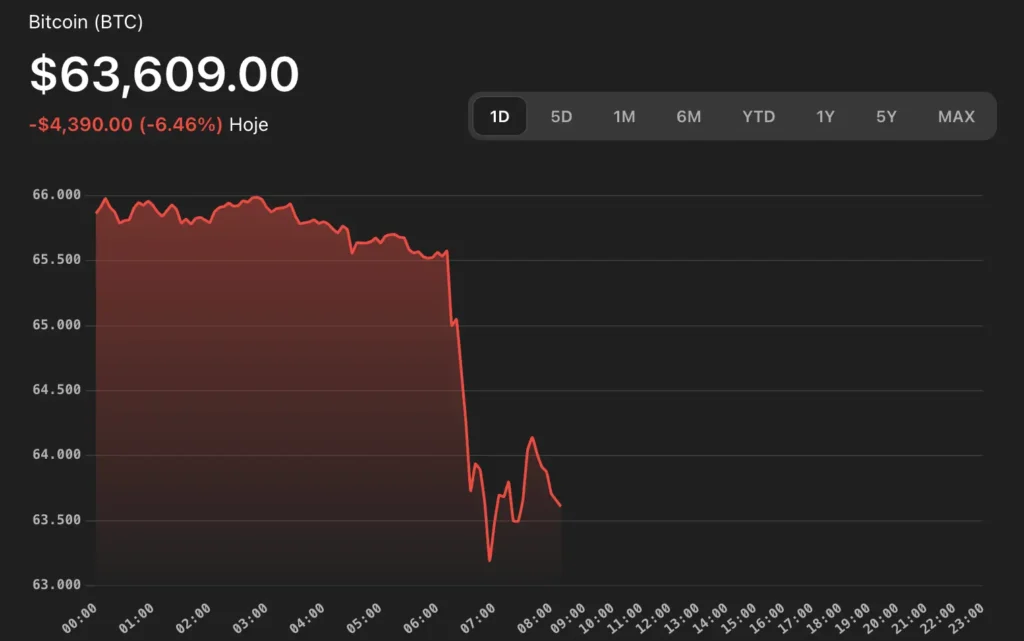
The correction was swift and accompanied by strong volatility. In the space of a few hours, BTC went from relative stability to an abrupt downward movement, liquidating leveraged positions and causing a cascade effect in derivatives. Coinglass data pointed out more than US$ 111 million in liquidations in the last 4 hours, especially in positions betting on the rise of BTC.
The episode reinforces a pattern already observed in previous crises. Largely because of its high liquidity (open 24/7 and global), the price reaction is almost instantaneous to unexpected events. It is common for investors to reduce their exposure to the market in the face of geopolitical tensions and temporarily switch to traditional assets such as the dollar and US Treasury bonds.
The move also impacted the rest of the crypto market. Ethereum and other altcoins extended their percentage losses, reflecting increased risk aversion. The fear and greed index returned to “Extreme Fear” territory, while trading volume soared, signaling the market's sudden panic.
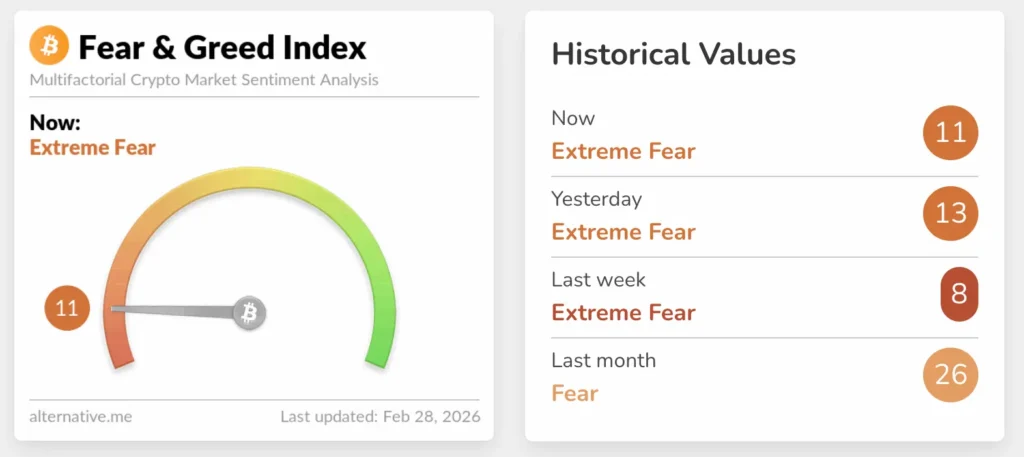
Despite the fall, analysts point out that movements of this kind are not uncommon in external shock scenarios. Bitcoin has already demonstrated, in previous events, its ability to recover after absorbing the initial impact...
In the short term, technical support in the region of US$ 63,000 to US$ 64,000 becomes relevant. A consistent loss of this level could open up space for deeper corrections. On the other hand, a rapid stabilization could reinforce the thesis that the market overreacted to the initial shock.
More than an isolated price movement, the episode highlights how Bitcoin, even after years of institutional maturation, remains sensitive to the macro and geopolitical scenario.
 Português do Brasil Português do Brasil
  English
 Español