Breaking News






Your Guide to Sovereignty
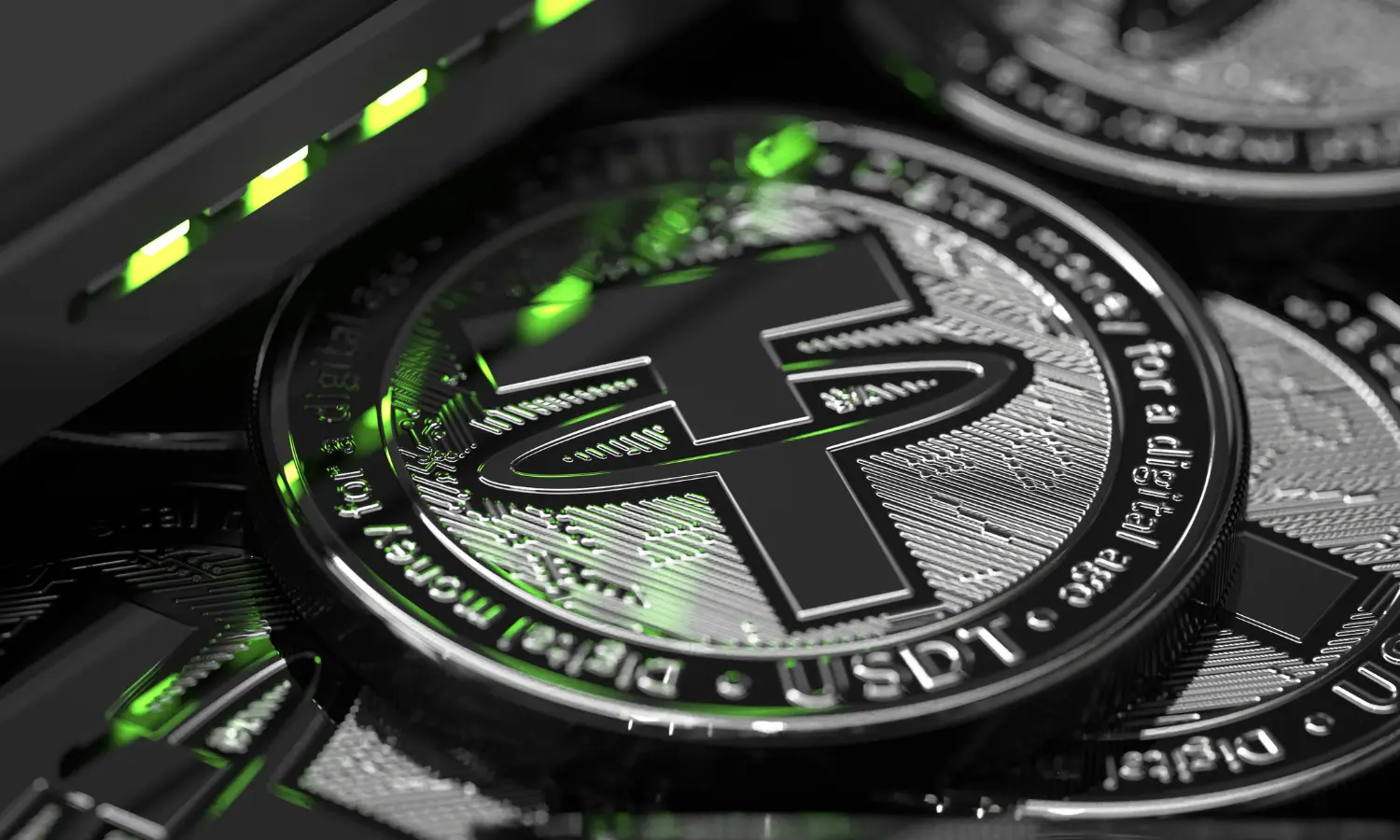
The Tether dollar, better known by its acronym USDT, is a stablecoin created to mirror the value of the American currency 1:1.
Stablecoins are currencies that, instead of fluctuating in price freely, have their price pegged to a state currency, gold, silver or other asset. In the case of the USDT, it tracks the US dollar.
But like other cryptocurrencies, this digital dollar can be traded around the world without the need for intermediaries. It is also widely used in brokerages and payment platforms, acting as a bridge between the traditional world and the digital universe.
In practice, Tether serves as a stability option within a highly volatile market. When investors want to protect themselves from Bitcoin's price fluctuations, for example, but don't want to withdraw to the banking system, they usually buy USDT.
In a nutshell, is an easy way to dollarize part of your assets, without the need for an American bank account. It can also be used to receive payments in dollars over the internet by simply creating a wallet.
Tether is also useful for cross-border payments, as it eliminates the bureaucracy and limitations typical of the banking system. With stablecoin, sending money anywhere in the world becomes fast, cheap and free of those headaches with banks. This is why it has become so widely used in arbitration, remittances and global payments.
At the end of the day, Tether doesn't exist to replace the dollar, but to replicate its usefulness within a digital environment that demands speed and liquidity.
USDT currently has a market value of US$ 184 billion and a daily trading volume of US$ 54 billion. These figures place USDT as the third largest digital currency on the market, behind Bitcoin and Ethereum, while it is by far the most traded.
Table of contents:
In simple terms, each unit of Tether should correspond to one dollar held in reserves.
The structure is created by the company Tether Limited and the way it works is simple: customers go through document verification and pay for the issue of new USDT tokens. The company then issues the stablecoin to the customer and invests the money received as part of the reserve.
The details of Tether's reserves and independent audit reports are shown at transparency page of the company. Today, this data shows that most of the backing is made up of US treasury bonds, While precious metals, collateralized loans and even a portion in bitcoin complete the composition that supports the USDT.
Even at the time of writing this article, Tether's reserves exceed the market value of the tokens in circulation by more than US$ 6.7 billion.
The stability of this stablecoin is reinforced by its very scale. It is not only the world's largest stablecoin - is larger than all its main competitors combined, including USDC, DAI and other institutional stablecoins. On many days, USDT moves more volume than Bitcoin itself, which shows the degree of trust the market places in it.
In recent years, the US government has made significant progress in regulating stablecoins. The new proposal, debated in Congress and supported by bodies such as the Federal Reserve (the US Central Bank) and the Treasury, establishes that stablecoin issuers need to operate with highly liquid reserves, frequent audits and direct supervision from regulators.
The intention is simple: avoid systemic risks and turn stablecoins into a safer extension of the traditional financial system. In this environment, the USDT, with its ballast predominantly made up of US Treasury bonds, ends up fitting naturally in this direction.
This point is crucial because, indirectly, Tether transforms the money of foreign investors into demand for American debt securities. When someone buys USDT anywhere in the world, a relevant part of that money ends up being converted into Treasuries - exactly the kind of demand that the US government wants to keep strong and constant.
This dynamic creates an alignment of interests that considerably reduces the legal risks for the USDT. The U.S. government may press for more transparency, but it has no real incentive to stifle an issuer that buys billions of dollars in government bonds and reinforces international demand for Treasuries.
Tether therefore occupies a unique position: it is both part of the crypto system and an auxiliary cog in US economic policy. This doesn't completely eliminate the risks, but it does reduce the likelihood of radical action against USDT and strengthens the perception that it will continue to play a central role in the future of global stablecoins.
You may be wondering: so is buying Tether a good investment? Actually, as a stablecoin, Tether doesn't appreciate in value like a traditional cryptocurrency, but it does allow for alternative strategies to generate a return.
The first is stablecoins lending, This is nothing more than lending your USDT on centralized or decentralized platforms in exchange for interest. Exchanges like Kraken, Binance, OKX and Bitget pay daily yields, while protocols DeFi such as Aave and Compound offer more variable returns. HodlHodl is another option for lending your USDT in exchange for interest; trading takes place directly between users, while the platform serves as a escrow to secure the loan guarantee.
Learn more about where to invest your cryptocurrencies to generate income read our full article on the subject.
In some of these options you can withdraw at any time, in others you wait until the end of the loan to be paid back along with the full interest. You should study each option and do your own research before investing your hard-earned digital dollars.
But probably the most common way of using Tether is still as opportunity capital. Many investors use the USDT only as a parking lot for money, a tool for their own business. trades. In other words, a liquidity cushion to buy other cryptocurrencies when the investor believes it's time for a market downturn. It's valid, but considerably risky to make money with trading of cryptocurrencies.
Despite its importance in the crypto market, Tether is not without its risks and controversies. The main criticism has always revolved around the transparency of the reserves. For years, the company was blamed for not publishing complete audits, which raised doubts about the real proportion of dollars and liquid assets that supported the 1:1 parity.
Although Tether today publishes detailed reports and has independent audits, part of the community still considers the track record a point of attention.
Another risk involves the composition of these reserves. Even with the predominance of US Treasury bonds - considered one of the safest assets in the world - the rest of the backing includes loans, corporate shares and even a portion in bitcoin. These components, although a minority, can introduce volatility or credit risk in extreme scenarios. This does not jeopardize the USDT in the short term, not least because its reserves exceed its circulating value, but it is still a risk.
There is also regulatory aspect. Governments around the world are creating new legislation for stablecoins, and this could affect the operation of companies like Tether. However, since a significant part of USDT reserves goes directly to Treasuries, The US government has little incentive to impose severe measures against an entity that helps, even indirectly, to finance its own debt. Even so, regulatory changes always constitute a structural risk.
Finally, there is operational risk - from failures on platforms where USDT is traded, to hacks on exchanges, even human errors in the use of wallets. The token itself is stable, but it circulates in an ecosystem that is not infallible. In short, USDT is solid, widely used and increasingly aligned with the traditional financial system, but it is not immune to criticism or challenges that require constant attention.
Tether is the name of the company that issues the stablecoin, and USDT is the name of the token it created. The two names sometimes get mixed up in everyday life, so “Tether” can refer to both the company and USDT itself, depending on the context.
Most USDTs circulate on the Ethereum and Tron networks, but USDT is also present on the Solana, Aptos, Ton, Avalanche, Celo, Cosmos, Kaia, Near, Tezos, Polkadot Asset Hub and Liquid sidechain networks.
In relation to the real, yes, if the dollar rises. But the function of the USDT is to always remain pegged to the dollar.
Tether belongs to the iFinex Inc. group, the same conglomerate that controls the Bitfinex exchange. Like a large company, it has not just one owner, but a distributed leadership among its executives. Among the best-known names are Jean-Louis van der Velde (CEO of iFinex), Giancarlo Devasini (CFO of iFinex) and Paolo Ardoino (current CEO of Tether).
Do you want to deepen your understanding of Bitcoin, stablecoins and financial sovereignty? If you have any questions, want to better organize your studies or understand how to use sovereign tools in a practical and safe way, fill in the form below.
 Português do Brasil Português do Brasil
  English
 Español