Breaking News


Popular News



Your Guide to Sovereignty
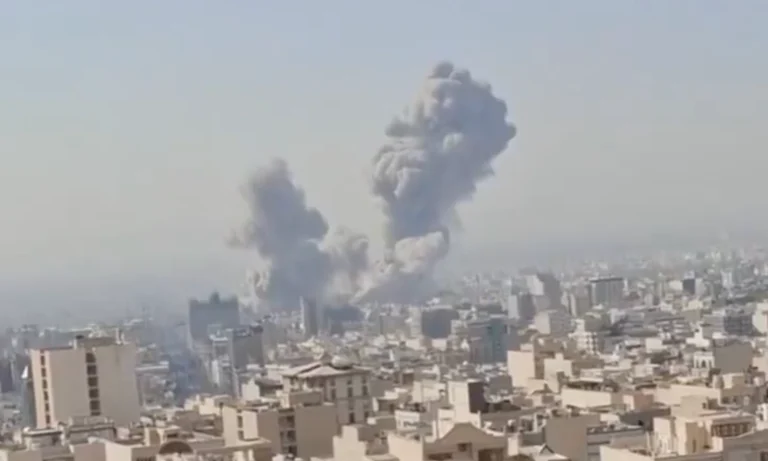
Shortly after the first missiles hit Iran, an interesting movement by Iranian citizens was noticed by the crypto data analysis company Elliptic. It was noticed at the country's largest cryptocurrency exchange, Nobitex, a 700% increase in withdrawals in a matter of hours.
It wasn't just market volatility or speculation. It was capital flight in real time. The airspace is closed, the “Supreme Leader” was eliminated on the first day of the attack, At a certain point, the internet went down all over the country. Some were quick to realize that staying in the banking system wouldn't be safe.
According to data of Elliptic, a large part of Nobitex's withdrawals were directed to foreign exchanges which historically already received flows from Iran. Since banking restrictions and international sanctions were already affecting the population, the alternative path of cryptocurrencies was already being used even before this war began.
This it wasn't the first time that Iranians took money out of the country via Bitcoin. At the beginning of the year, when internal protests against Ali Khamenei's regime escalated and there was an internet blackout, a similar outflow of resources was noticed.
Even with the exchange's website down, some flows continued - which raises an uncomfortable question: who maintains operational access in times of blackout? Two other peaks coincided with announcements of new US sanctions. In all cases, the behavior was the same: when political risk rises, the search for assets beyond the reach of the state is increasing.
“The outflows potentially represent a capital flight that bypasses the traditional banking system,” said Elliptic co-founder Dr. Tom Robinson. The phrase is technical, but the phenomenon is simple: individuals trying to protect the fruits of their labor.
Meanwhile, the global market reacted to the geopolitical shock. Bitcoin fell from approximately US$ 67 thousand to below US$ 64 thousand in minutes, a drop of close to 5%. The total crypto market capitalization shrank by around US$ 128 billion, pressured by cascading automatic liquidations.
The recovery came as quickly as the fall. At the time of writing, Bitcoin has returned to trading above US$ 68,000 again. When we compare BTC with the Iranian rial, the price of Bitcoin has not fallen: it increased massively because the local currency plummeted in value.
Kaiko analyst Thomas Probst attributed the recent movement to a “more restrained than expected” reaction. But beyond the volatility, the episode reinforces a structural point: in scenarios of war, sanctions and capital controls, digital assets become more than speculative instruments. They become an exit route.
When governments clash, national currencies and banking systems are exposed. Decentralized networks, on the other hand, continue to operate 24 hours a day, without borders and without the need for political authorization. For millions of people under closed regimes or at risk of instability, this is not just theory, it is a practical tool for self-preservation.
On Tuesday (03/03) Chainalysis published that on-chain data showed US$ 10.3 million in cryptocurrency withdrawals from Iran's main exchanges between 28/02 and 02/03, following the US and Israeli airstrikes. In other words, Chainalysis reinforces the thesis that citizens used Bitcoin and other cryptocurrencies to protect their capital during the conflict.
“One explanation is consistent with what we observed during the recent waves of protests: ordinary users withdrawing their assets from centralized exchanges to self-custody as protection against instability. Self-custodial cryptocurrency wallets offer security and liquidity, as well as preserving optionality.”
However, the analysis firm raised other hypotheses. “Cryptocurrency companies in sanctioned jurisdictions, such as Iran, regularly transfer funds to new wallets to hide their activity on the blockchain, knowing that, due to the comprehensive sanctions, identifying their wallets makes it more difficult to access the liquidity of the main cryptocurrency markets,” Chainalysis wrote in its publication. In other words, part of the movement could be by the brokers themselves.
And finally, a third, even more unpleasant hypothesis. Agents linked to the state, such as the terrorist group Hamas, the Iranian Central Bank sanctioned by OFAC and the Islamic Revolutionary Guard Corps itself could also be responsible for increasing this outflow from brokerages, potentially by withdrawing funds linked to sanctions evasion and illicit business.
To follow possible updates of any story published in Soberano, follow us on X to receive everything first hand:
 Português do Brasil Português do Brasil
  English
 Español